
As described in Section 1.3, it is essential to have an efficient design to collect expert information given the large number of receptor impact models, landscape classes and bioregions or subregions to address with limited resources. The design must also reflect the predicted hydrological regimes as summarised by hydrological modelling outputs. Without this information, design points may present hydrological scenarios that are unrealistically beyond the bounds suggested by the landscape class definition. Alternatively, insufficiently wide bounds on hydrological regimes lead to an overextrapolation problem when receptor impact model predictions are made conditional on hydrological simulations at the risk estimation stage. The design must further reflect the feasibility of the design space, which may be constrained by mathematical relationships between related hydrological response variables. The design must accommodate the requirement to predict to past and future assessment years. The design must also allow for the estimation of potentially important interactions and non-linear impacts of hydrological response variables on the receptor impact variable. Moreover, the predictions of the receptor impact variable in future years may depend on the state of the receptor impact variable in past years. For example, a forest stand may persist over time periods longer than the time frame considered by BA. The past states of the forest stand may have an important influence on future states; this temporal relationship may also interact with hydrological response variables. Therefore, this ecological temporal relationship, which if ignored may confound the relationship between the receptor impact variable and the hydrological response variables, must also be accommodated for by the design. These above requirements must all be met by the design to enable prediction of receptor impact variable response to hydrological changes at the time points and spatial scales required by BA.
For each landscape class, a set of receptor impact variables (e.g. woody riparian vegetation) and a set of hydrological response variables are defined. For each landscape class, different receptor impact variables may not be connected to the same hydrological response variables. The following section describes the general framework of the elicitation approach.
As noted in Chapter 1, in BAs, hydrological response variables are defined as the hydrological characteristics of the system that: (i) are thought to be instrumental in maintaining and shaping the ecosystem components, processes and functions provided by the ecosystems in each landscape class, and (ii) have the potential to change due to coal resource development. Receptor impact variables are defined as the components of the ecosystem that, according to the qualitative mathematical model developed at the preceding qualitative modelling workshop, potentially change due to changes in the hydrological response variables. Receptor impact models describe how changes in hydrological response variables may impact particular aspects of ecological systems at a project-defined spatial and temporal scale. A receptor impact model describes the distribution of outcomes that would be expected to be observed in a receptor impact variable given a particular change to one or more hydrological response variables.
Where possible, receptor impact models would be based on data. In practice, the empirical information is usually incomplete so structured elicitation with experts is used to integrate their knowledge into the models. The quantitative relationship between receptor impact variables and hydrological response variables is the focus of the receptor impact modelling workshop that follows the qualitative modelling workshop in the overall workflow of the BAs (Figure 3).
The proposed approach allows the elicitation to proceed either on magnitude (e.g. abundance or percent cover) or presence–absence responses. If experts prefer to think about presence–absence for some combinations of covariates, but magnitude for other combinations, then both can be accommodated within a single model. The elicitation target is continuous (i.e. mean abundance or probability). Technical details are given in the following sections.
The structure of the elicitation is as follows. Time is indexed using  for receptor impact variable responses. Here, refers to a specific year of assessment for the receptor impact variable that corresponds to the pre-specified time points of interest. The complete set of assessment years is given by
  , which corresponds to past, short-term future and long-term future assessment time points, respectively. Associated with each assessment year (that is, for
  ) are relevant time periods of hydrological history
  , which vary depending on whether the histories are with respect to groundwater (
 ) or surface water (
 ) hydrological response variables. For surface water hydrological response variables, the
  are 30-year time periods with end-date (inclusive). For example, the reference period for all surface water hydrological response variables is given by the closed interval,
  . The groundwater hydrological response variables in the future period are defined relative to the same reference period used for the surface water,
  . The value of the groundwater hydrological response variable depends only on whether or not the assessment year occurs in the reference period or not, and does not depend on whether or not the assessment year occurs in either the short-term or long-term assessment year. For groundwater hydrological response variables, the
  for the short and long periods are therefore the same (
 ); in this case, the hydrological response variable is, for instance, a summary statistic considered over the whole of the future period. An example is the maximum drawdown in the future period relative to the groundwater level in the reference period. The and , are visualised in Figure 11.

The assessment years, given by  with
with  , were chosen to assess the potential response of the receptor impact variable early in the development period (
 ), over an intermediate period of development (
 ) and also the enduring impact of the developments (
 ). The hydrological response variables (for example, the annual mean number of low-flow days over a 30-year period) were defined by a summary statistic derived for the intervals
  that depended on whether the hydrological response variable was surface water or groundwater (
 ). The reference period was shared across the hydrology disciplines,
  . The surface water hydrological response variable intervals
  spanned the 30 years preceding . The groundwater hydrological response variable intervals only depended on whether the corresponding assessment year was in the reference or future period; the intervals for the short-term and long-term future assessment years were therefore equivalent for groundwater,
  . The groundwater future interval
  was the only interval that varied depending on bioregion. In this example,
  .
.
Let  be a receptor impact variable at time . It is assumed that can depend on:
- hydrological response variables derived for the corresponding intervals

- previous values of the receptor impact variable
 .
.
The goal of the receptor impact modelling workshop is to predict how the receptor impact variable changes at future time points given the reference value of the receptor impact variable and the hydrological response variable values. The Assessment team therefore elicits subjective probability distributions for the receptor impact variable for particular hydrological scenarios from the experts. The probability distributions express uncertainty in the impact of the hydrological change across the region. For example, the canopy cover of woody riparian vegetation may respond to an increase or decrease of a particular flood expected frequency of occurrence in the 30 years preceding the time point of interest. The predicted receptor impact variable may also depend on the level of the receptor impact variable (e.g. canopy cover) in the past. For example, a change in the hydrological response variable at a future time period relative to the reference period may be relevant if starting from a high level of canopy cover, but perhaps less important if starting from a very low canopy cover. The Assessment team therefore conditions the predictions of receptor impact variables on a stated level of the receptor impact variable at the reference assessment year, which is assumed known. However, the receptor impact variable (e.g. percent cover) at the reference assessment year is actually unknown. Therefore, the experts first assess how the receptor impact variable is distributed across the landscape class at the reference assessment year.
Given the above rationale, the receptor impact modelling workshop elicitation targets are defined by the conditional probability distributions of:
- the receptor impact variable value at the reference assessment year 2012 given any hydrological response variables in the reference period
- the receptor impact variable value at a future year given a value at the reference year and the hydrological response variables during the future time period.
The statistical model and elicitation process is summarised in Figure 12. Note that the final estimated receptor impact variable at time  depends on the hydrological history prior to
  , but the elicitation has simplified this by conditioning instead on the value of the receptor impact variable at time in the dependence structure of Figure 12. For example, a scenario considered in elicitation 2 (see Figure 12) conditions on the past receptor impact variable (
 ) instead of the possibly multiple hydrological response variable covariates that correspond to time and period
  .
.
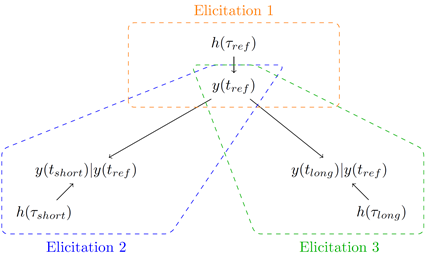
Figure 12 Elicitation relationship diagram, with the notations used in the related sections
For any  , the receptor impact variable at time
  depends on the current hydrological response variables (i.e. in the period
  ) and the value of the receptor impact variable at time
  .
.